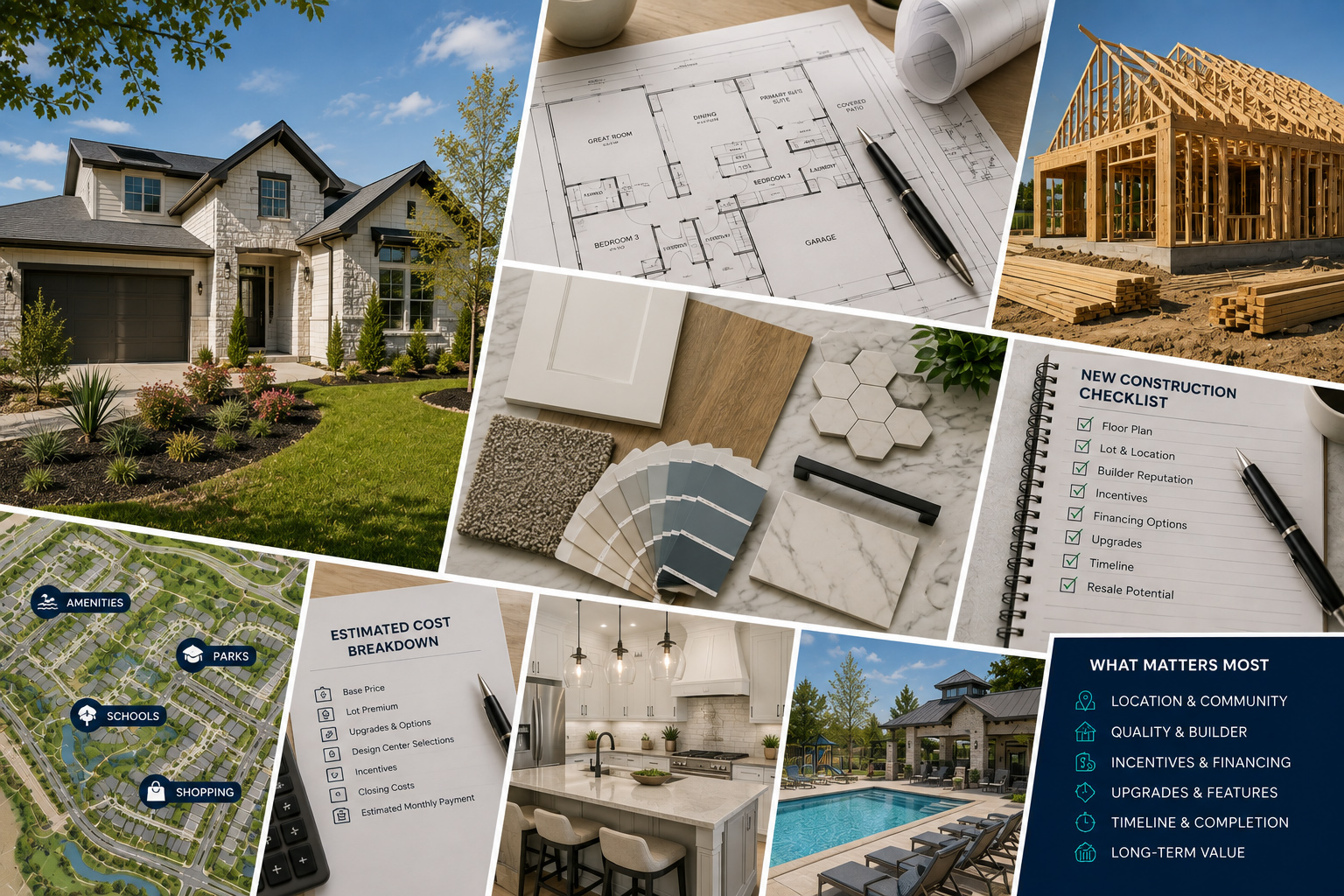
Why Choose New Construction?
New construction can offer things that are harder to find in resale homes: modern floor plans, energy efficiency, newer building standards, warranties, and the ability to choose certain finishes or features.
Depending on the stage of construction, you may be able to build from the ground up, select a home already under construction, or purchase a completed inventory home. Each comes with different timelines, choices, pricing, and opportunities to negotiate.
The key isn't simply deciding whether new construction is “better.” It's comparing the complete opportunity against the resale homes available to you.
What You Need to Know
1. The Builder's Sales Team Represents the Builder
The sales consultant can be incredibly helpful, but their job is to represent the builder and sell the builder's homes. Having your own representation gives you someone looking at the purchase from your side of the table.
2. Bring Your Agent in Early
Many builders have specific rules about when and how a buyer's agent must be registered. Don't assume you can tour first and bring your agent into the process later. If you're already working with an agent, involve them before your first visit or online registration.
3. Builder Incentives Need to Be Evaluated
Closing-cost incentives, rate buydowns, design-center credits, and price reductions can all have real value. But the biggest advertised incentive isn't necessarily the best financial option. We want to compare the complete deal, including financing, rate, price, taxes, upgrades, and long-term cost.
4. The Model Home Isn't the Base Home
Model homes are designed to show what's possible and often contain significant upgrades. Flooring, cabinetry, lighting, structural options, outdoor living spaces, and even room configurations may cost extra. Understanding what's standard versus upgraded is important before comparing prices.
5. Lot and Location Still Matter
The house is only part of the purchase. Lot position, traffic, future development, schools, nearby commercial uses, tax rates, HOA costs, and where you sit within the community can all affect your experience in the home and its future resale.
6. New Doesn't Mean Skip the Inspection
A new home can still have construction issues. Independent inspections during appropriate stages of construction and/or before closing can identify items that should be addressed before you take ownership.
7. Timelines Can Move
Weather, labor, materials, permitting, inspections, and construction schedules can all affect completion. If you're building rather than buying a completed home, it's important to understand how changes in timing could affect your lease, current home, financing, rate lock, and moving plans.
Look Beyond the New-Home Feeling
It's easy to fall in love with a model home. Our job is to look beyond the countertops and finishes and evaluate the whole opportunity.
How does the location compare? What are the taxes? What will the neighborhood look like when it's built out? How much inventory does the builder still control? What incentives are being offered? How does the home compare with resale options nearby? And if you need to sell it five or ten years from now, who is the likely buyer?
Sometimes new construction is clearly the better opportunity. Sometimes a resale home a few streets away makes more sense. The goal is to understand both and make the decision with your eyes open.
Exploring New Construction?
Before you register with a builder or start touring model homes, let's talk about what you're looking for. We can compare communities, builders, incentives, resale options, and the bigger picture before you commit to anything.